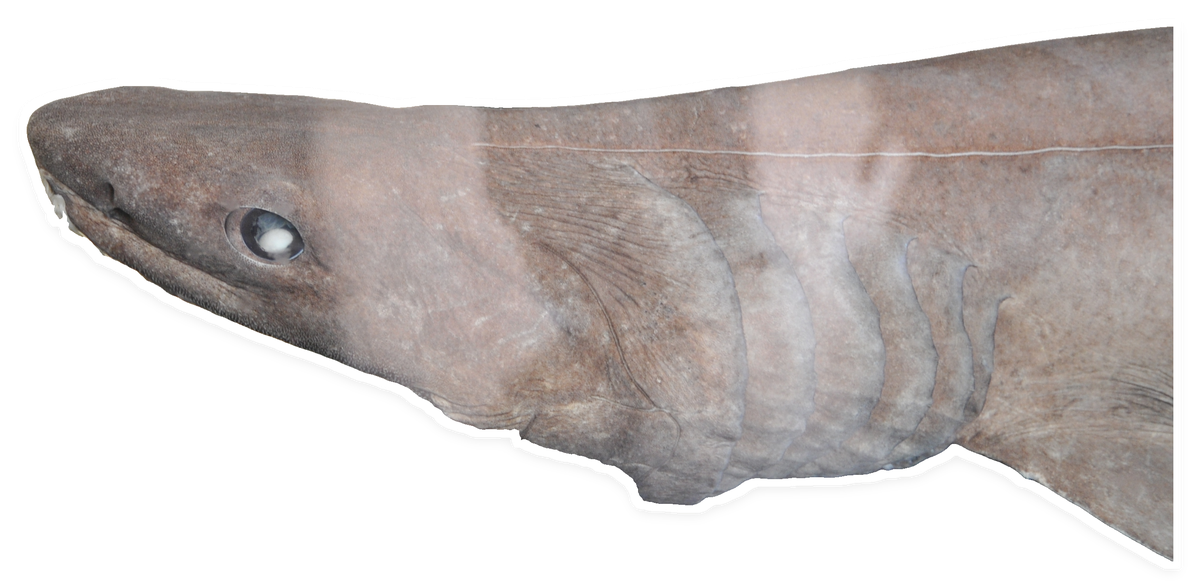
Frilled shark
We found no report of anyone timing this shark's pregnancy from start to finish, so the figure is an estimate: about 3½ years, cited alongside a Japanese study that measured how fast its unborn babies grow.
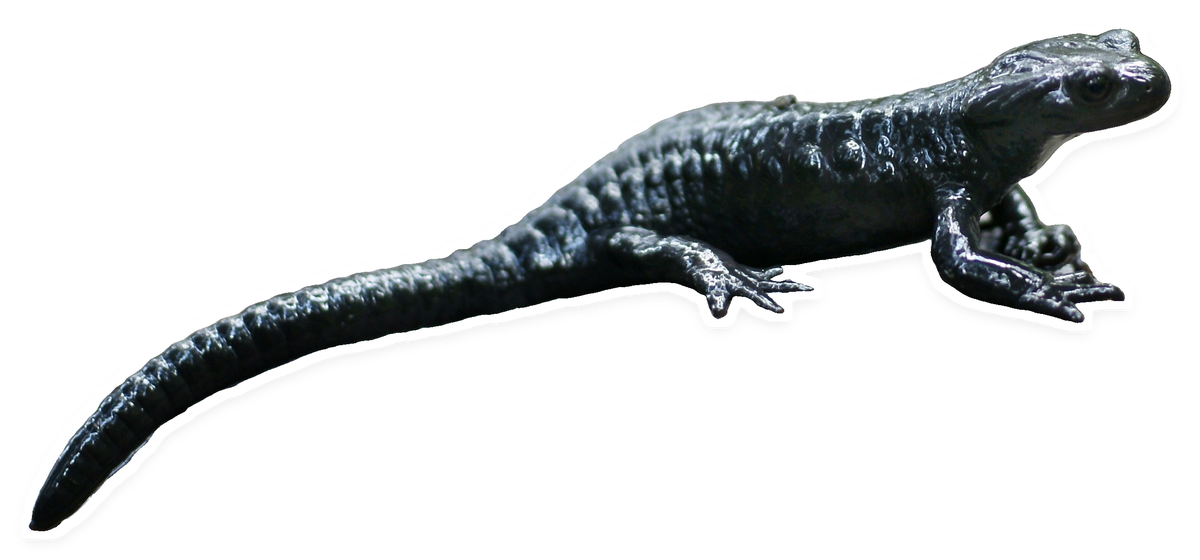
It's not the elephant. Two much stranger animals may stay pregnant for around three years or more, and we couldn't find a source that settles which one wins.

We found no report of anyone timing this shark's pregnancy from start to finish, so the figure is an estimate: about 3½ years, cited alongside a Japanese study that measured how fast its unborn babies grow.

A salamander of the Alps whose babies develop all the way inside their mother. Below 1,000 m3,300 ft that takes about 2 years. Up in the highest places, probably 4.
The shark's 3½ years is nearly 5 human pregnancies in a row!
In a 1990 study of 264 frilled sharks from Suruga Bay, Japan, scientists kept unborn babies in artificial conditions for up to 134 days. They grew just 10–17 mm0.39–0.67 in a month, roughly a fingernail's width. Scientists cite 3½ years alongside that growth rate. We couldn't read the full study to see how it gets from one to the other, so treat the number as an estimate, not a stopwatch reading.
The rule is simple: the higher the mother lives, the longer she waits. One forestry guide says 2 years below 1,000 m3,300 ft, 3 years between 1,000 m3,300 ft and about 2,000 m6,600 ft, and in the highest places probably 4. Another source gives 2 years at 650–1,000 m2,100–3,300 ft and 3 years at 1,400–1,700 m4,600–5,600 ft.
Both champions have a catch. For the shark, older estimates say as little as 1 to 2 years. For the salamander, the 4 is a "probably". Until the figures firm up, it's a photo finish.
Frilled shark photo: saname777 from Tokyo, Japan, CC BY 2.0, via Wikimedia Commons · Alpine salamander photo: böhringer friedrich, CC BY-SA 2.5, via Wikimedia Commons